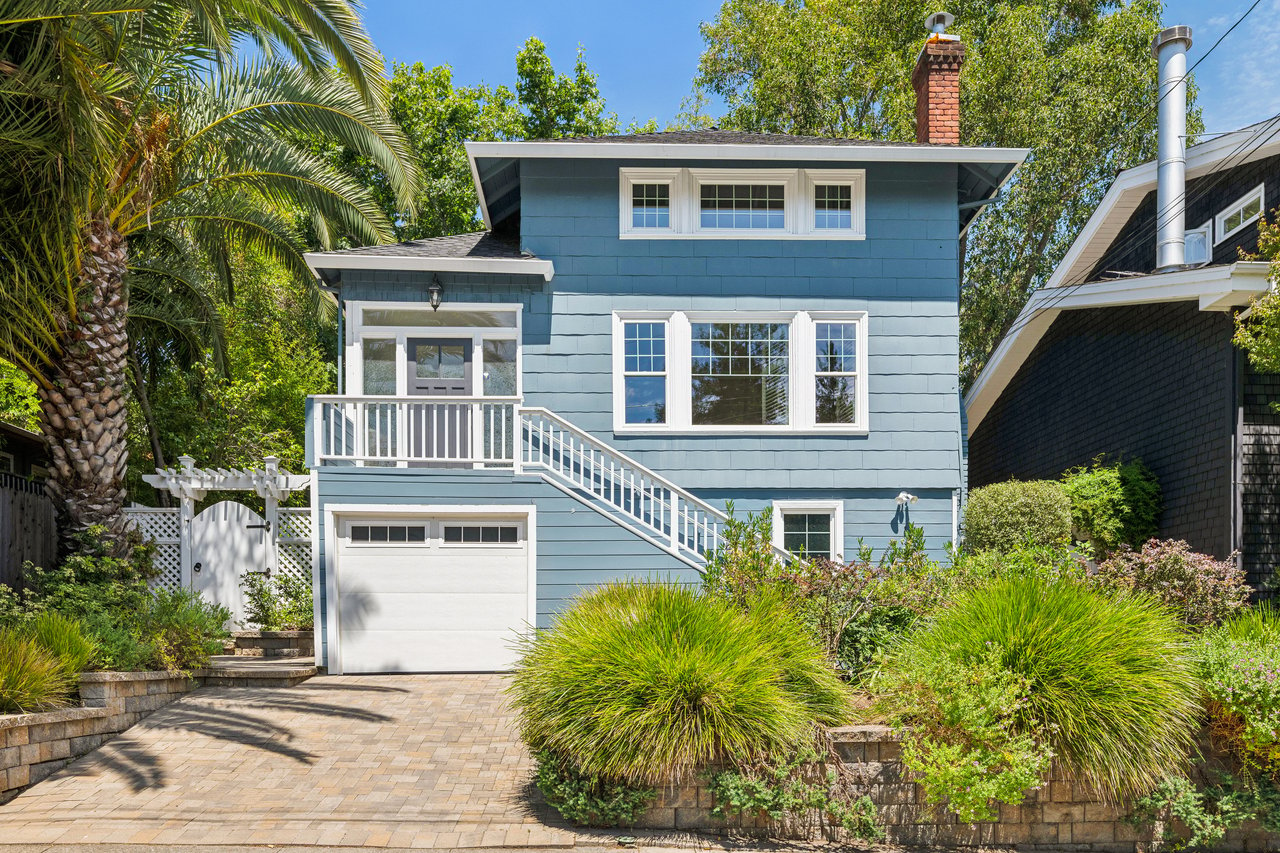
If you're selling in San Anselmo this year, you've probably heard the headline: the town got rid of the inspection. What most people haven't worked out yet is which inspection, and what quietly took its place as the only mandatory pre-sale check left standing.
On March 24, 2026, San Anselmo's Town Council adopted Ordinance 2026-1199, eliminating the requirement for homeowners to obtain a Residential Building Records Report when selling their property. That report had been part of nearly every sale in town since 1969, and its disappearance is real news for anyone listing a house this year. But it isn't the whole story. A separate, unrelated inspection, run not by the town but by the Ross Valley Sanitary District, still has to happen on almost every San Anselmo sale. One requirement went away. The other never left, and it's now the last government checkpoint standing between listing day and closing.
What the Old Rule Actually Required
The Residential Building Records Report, sometimes called the RBR, sent a town inspector through the house before it could change hands. The point wasn't cosmetic. It was designed to identify the property's legal use, occupancy, and zoning classification prior to the completion of a sale. In practice, that meant comparing what the inspector saw against what the permit file said should be there, and flagging the gap.
The program processed a real volume of paperwork. Town staff reported that it processes approximately 140 resale reports annually, and the cost of getting one had climbed. The fee was raised recently from $400 to more than $1,000. Compared with what similar programs elsewhere in Marin require, where review can take up to four weeks depending on location and fees range from $250 to $1,260, San Anselmo's version stood out for its depth rather than its speed or cost. A staff report to the council noted that San Anselmo's program is the most comprehensive, as it includes reconciliation of town records to existing site conditions as well as review of planning and public works records.
That thoroughness had defenders. Code enforcement officer Bill Johnson, a former real estate agent himself, framed the inspection's purpose plainly: "We don't go looking for small stuff. I'm looking for things that are actually life safety issues."
Why the Council Pulled the Plug
The case against the program came mostly from agents who deal with San Anselmo transactions on a weekly basis. Chris Backer put it bluntly at the February meeting: "I have so many comments related to this program being cumbersome, expensive and overreaching." Agent Jenn Pfeiffer connected the fee and the timing to the kind of seller who has the least bandwidth to absorb either: "It's a broken permitting culture that we're affected by, and sellers are forced, at the last minute, to get up to code."
The council itself was split on the merits but landed on repeal. Mayor Steve Burdo summarized where things stood after the first hearing: "What I'm hearing is there's a majority here that would like to repeal the program." Councilmember Tarrell Kullaway's read was more personal: "The only time I've ever had to do this was here in San Anselmo, and it was very, I thought, redundant." Not everyone agreed on redundancy. Resident Brett Geithman told the council that when he bought his own home, the report told him something the standard disclosure package hadn't: "When my wife and I purchased our home in San Anselmo, this ordinance was part of that process," he said, noting the report affirmed his home is on a town-maintained road, and "that disclosure process really provided that clarity so we could make an informed decision."
By March, the votes were there, and the same three officials floated a middle path for the future rather than closing the door entirely. Burdo, Vice Mayor Chantel Walker, and Councilmember Eileen Burke suggested staff return at a later date with options to offer inspections on a fee-for-service basis. Walker was direct about wanting it available to whoever still wants it: "I think it's very important to at least have that option for those members of the public that want it."
Where San Anselmo Now Sits Among Its Neighbors
Repeal didn't just change San Anselmo's own rulebook. It moved the town from the strictest end of Marin's spectrum to the loosest, which is worth understanding before you assume every nearby town works the way San Anselmo used to, or the way it does now.
| Town or Area | Resale Inspection Status |
|---|---|
| San Anselmo | Repealed March 2026, no town resale inspection required |
| Ross, Tiburon, Fairfax, San Rafael, Belvedere | Similar inspection programs still in place |
| Corte Madera, Larkspur, Mill Valley, Sausalito | File-only reviews that cost $130 to $600 and take one day to two weeks |
| Novato | Ended its program in 2022 |
| Unincorporated Marin County | Has never had a resale inspection program |
If you're comparing notes with a friend who sold in Ross last year, or an agent who works mostly in Mill Valley, their experience with town paperwork won't map onto yours. That's the practical cost of a fragmented, town-by-town system: what applied to your neighbor's sale two miles away may not apply to yours at all.
The Rule That Didn't Move
Here's the part that gets lost in the "San Anselmo ended its inspection" framing. The Residential Building Records Report was a town program. The private sewer lateral requirement is a Ross Valley Sanitary District program, and RVSD's authority has nothing to do with what the Town Council voted on in March. RVSD's jurisdiction includes the City of Larkspur, Town of Ross, Town of San Anselmo, Town of Fairfax, and the unincorporated areas within the boundaries including Sleepy Hollow, Kentfield, Greenbrae, Fairfax, and San Anselmo. Its rules on sales have been in effect since before most current listings were built. All requirements went into effect July 1, 2014, except those relating to property sales, which became effective January 1, 2015.
The mechanics are specific. Property owners must obtain a Certificate of Compliance from RVSD for any of the following conditions: buying or selling a property, remodeling in excess of $75,000, or adding a bathroom. The process starts before the district ever gets involved: the seller coordinates a video inspection to determine the private sewer lateral condition, RVSD will not review the video itself unless it's part of a permit application, and the seller and buyer negotiate who will obtain compliance. Once a contractor is engaged, the contractor obtains the required sewer permit and schedules a final inspection for the District to witness the pressure test, and the District Inspector provides a Compliance Certificate after passing. If it doesn't pass the first time, a reinspection is required, and if lateral replacement is needed, financial assistance may be available.
There's a deadline attached, and it's one sellers can genuinely miss if they're not tracking it: you have 90 days from close of escrow, and you'll receive automated notice letters in the mail. Once earned, the certificate has real staying power: a Certificate of Compliance for a Private Sewer Lateral is valid for 20 years from the date it's issued.
One more wrinkle matters for older San Anselmo blocks where lots were subdivided decades ago. Some properties share a lateral with a neighbor rather than running an independent line to the main. A common, or shared, sewer lateral is a privately owned lateral that serves more than one property, and existing common laterals are part of RVSD's legacy system. That status carries a real financial consequence if repairs come up during a sale: common laterals do not qualify for Grant or Loan funding, as they do not conform to District specifications. If your home is one of those, the sewer conversation in your transaction looks different than it does for a neighbor with a standalone line, and it's worth knowing which one you have before an offer is on the table, not after.
What This Actually Changes for a 2026 Listing
Put the two rules side by side and the real shift comes into focus. The requirement that used to catch unpermitted additions and zoning mismatches early, before a house ever hit the market, is gone. The requirement that governs what's buried in the yard is exactly where it's always been. That's not a wash. It means the burden of catching problems with permits or occupancy now falls entirely on the standard disclosure package and whatever inspections the buyer chooses to order, rather than on a town-mandated walkthrough that happened automatically. And it means the sewer lateral certificate, once one line item among several, is now the single mandatory government inspection standing between your listing and your closing.
For sellers thinking about hitting the market this year, that argues for two adjustments rather than one, since the old rule's absence doesn't lower the total amount of scrutiny a sale gets, it just moves where that scrutiny happens and who's paying attention to it. First, order the sewer lateral video inspection early rather than waiting for it to surface as a mid-escrow surprise, especially if the home hasn't had lateral work done in the past 20 years or sits on a lot with a shared line. Second, treat pre-listing disclosure and preparation with the seriousness the old town inspection used to provide by default. That safety net is gone. Something has to replace it, and right now that something is you and your agent, not a town inspector on a schedule.
A Few Questions Worth Settling Before You List
Does the repeal apply to sales already in escrow? Ordinance 2026-1199 took effect after the March 24, 2026 vote. If your listing or contract predates that, confirm with your agent and escrow officer whether the town's prior report requirement still applies to your specific timeline.
Is the sewer lateral certificate a replacement for the old town report? No. They've always been separate requirements from separate agencies. The RVSD certificate covers only the sewer lateral and has applied to San Anselmo sales since 2015, independent of whatever the town's own resale inspection program required.
Could San Anselmo bring back some version of inspections? Possibly. Council members floated a fee-for-service option for buyers who want one, though no program has been adopted as of this writing. Worth checking the town's current guidance before assuming the door is permanently closed.
If you're weighing a sale in San Anselmo this year and want to know exactly what your specific property will need before it hits the market, from lateral status to listing timeline, the McArthur Love Team has spent years tracking exactly this kind of town-by-town detail across Marin. Contact us to talk through what your sale actually requires.